Confident Movement Starts Early
Able To Achieve Together works with children and teens who are blind or visually impaired to help them understand their surroundings, use their vision and other senses more effectively, and build practical skills for everyday life at home, school, and in the community.
Schedule a Free Assessment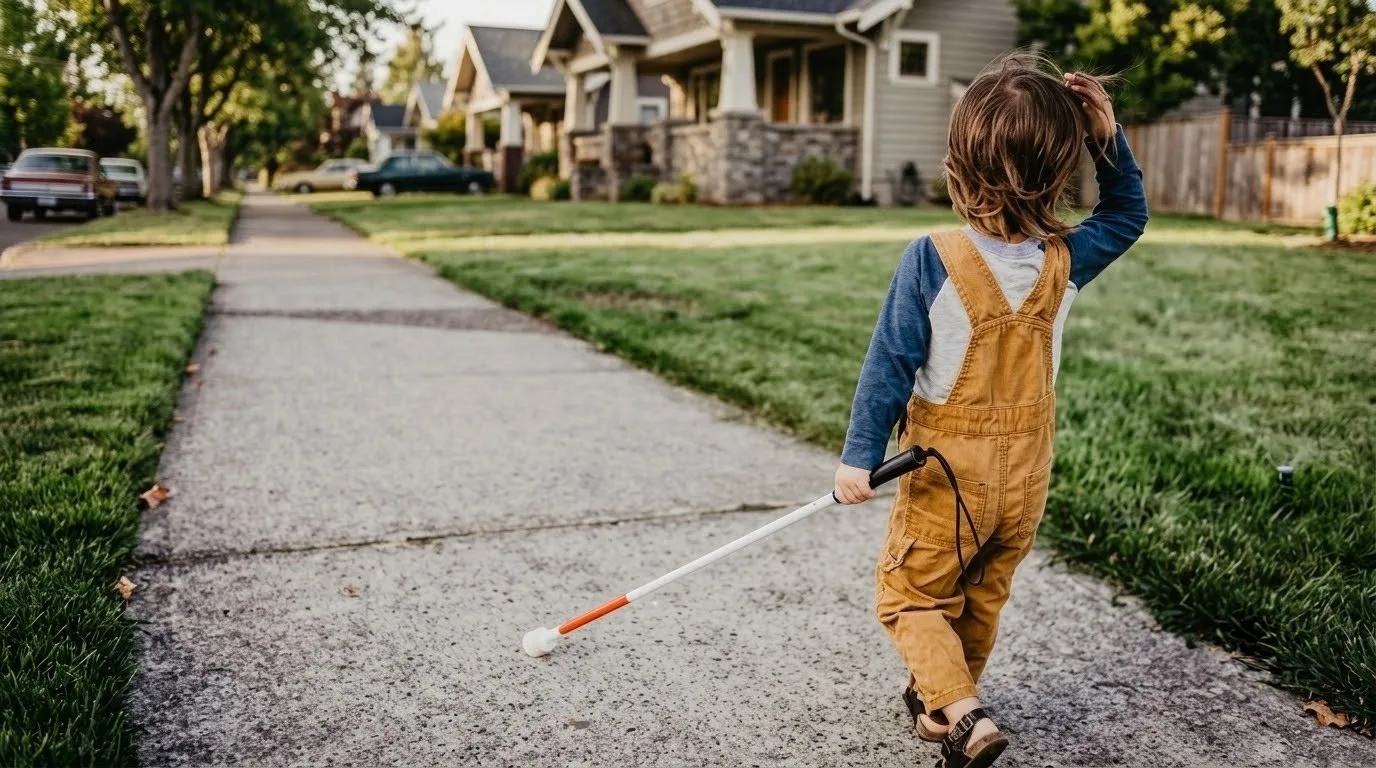
Every Child Deserves to Move With Confidence
- Everyday hesitationWatching your child hesitate at every curb, step, or unfamiliar room — and not knowing how to help.
- Falling behind peersWondering if they're missing out on the cane skills, braille readiness, or independence their sighted peers take for granted.
- Slow-moving supportFeeling like school or community resources move too slowly, or don't offer truly individualized instruction.
Practical Skills for Everyday Life
Early Cane Introduction
The cane can become a natural part of a child's movement and exploration. Early instruction helps children get comfortable using a cane, notice changes in the ground, find obstacles, and begin building safe travel habits from the start.
Functional Vision & Environmental Awareness
Many children use their vision differently depending on lighting, distance, clutter, movement, or fatigue. Families are helped to understand what their child is noticing, what they may be missing, and how to support safer movement through real-life spaces.
Pre-Braille, Literacy & Braille Instruction
Reading and learning begin with strong hands, curiosity, and access to information. Early tactile skills, pre-braille readiness, and braille instruction are supported so children have more ways to learn, communicate, and participate.
Teen Mobility & Bioptic Readiness
As teens get older, they need skills that help them take more ownership of their world. Instruction may include walking routes, street crossings, public places, visual scanning, monocular use, and preparation for bioptic training when appropriate.
I have had the pleasure of watching Charlotte take care of her clients for years. She is dedicated, affordable and easy to work with! She is great at teaching families what to do with their blind loved ones, as well as teaching mobility and braille. Highly recommend!
How It Works
Personalized Assessment
Every family starts with a personalized assessment to understand your child's vision, needs, and goals.
Individualized Sessions
Sessions are tailored to your child's age and pace, at home, school, or in the community.
Growing Independence
Your child builds real skills for real environments — confidence that carries into every part of their day.
Frequently Asked Questions
What age can my child start orientation & mobility instruction?
There's no single "right age" — instruction is built around your child's developmental readiness, not a strict age cutoff. Early cane introduction and functional vision work can often begin in early childhood, with instruction evolving as your child grows.
Do you work with my child's school or IEP team?
Yes. Coordination with school districts, teachers of the visually impaired, and IEP teams is available to make sure instruction supports — not duplicates — what your child is already receiving.
Will my teen be prepared for more independent travel as they get older?
Yes. Teen instruction focuses on real independence — street crossings, public places, visual scanning, and monocular use — with preparation for bioptic training when appropriate.
What if my child doesn't have a good grip yet for a cane?
There are a variety of lightweight canes available, and grip strength develops with practice — this is a normal part of early instruction, not a barrier to starting.
Give Your Child the Skills to Move With Confidence
Schedule a free assessment to see how orientation & mobility instruction can support your child.
Schedule a Free Assessment